Introduction
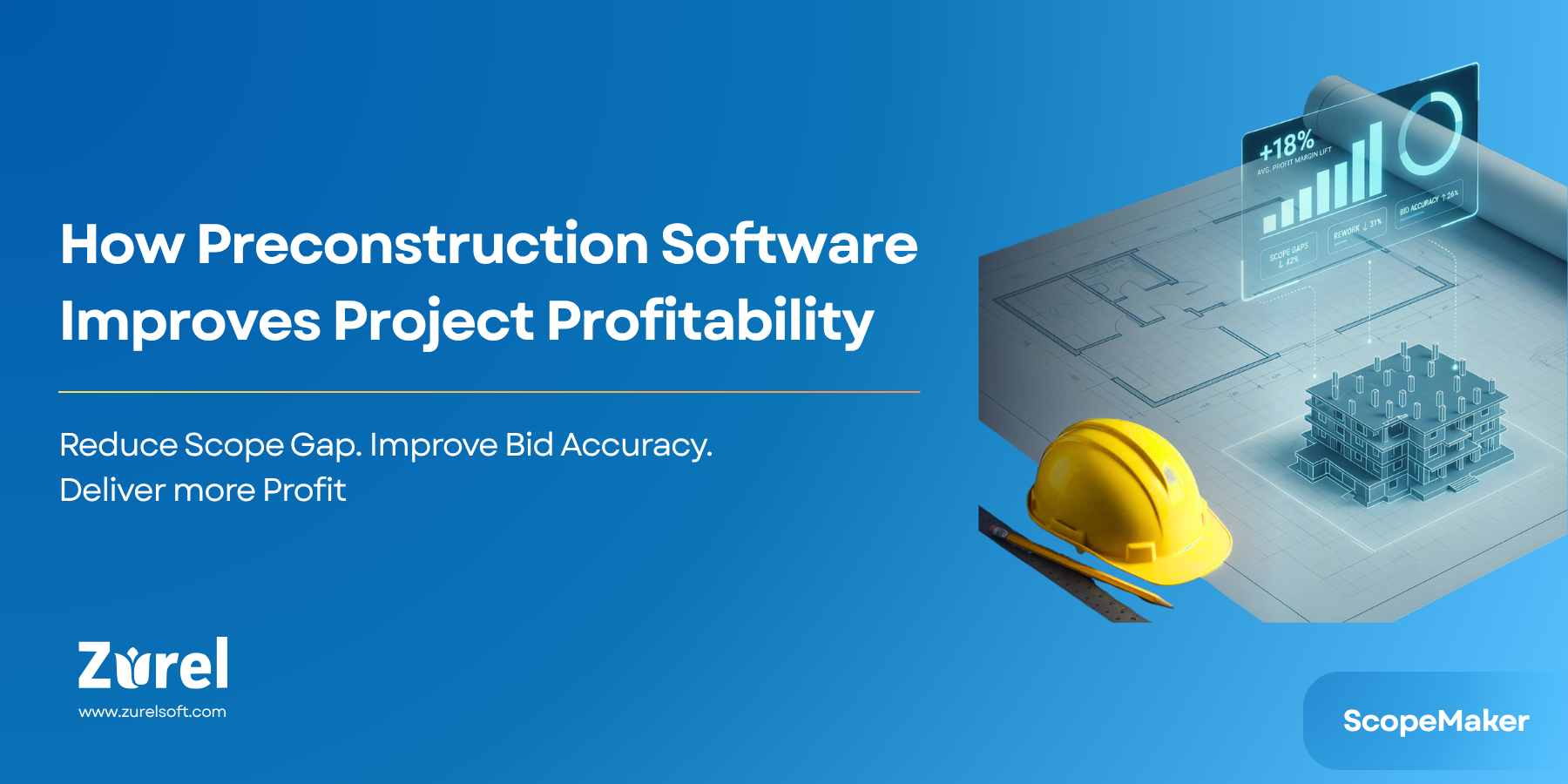
Every successful construction project begins long before crews arrive on-site. During the preconstruction phase, decisions about project scope, budgeting, estimating, scheduling, and subcontractor coordination have a direct impact on project profitability. Even small mistakes made at this stage can result in costly change orders, delays, rework, and reduced profit margins.
Many contractors still rely on spreadsheets, email chains, and disconnected documents to manage preconstruction. While these tools may work for smaller projects, they become inefficient as projects grow in size and complexity. This is where preconstruction software makes a significant difference.
Preconstruction software centralizes planning, standardizes documentation, improves collaboration, and automates repetitive tasks, enabling contractors to make better decisions before construction begins. By reducing errors and improving efficiency, it helps construction companies deliver projects more profitably.
In this article, you’ll learn what preconstruction software is, how it improves project profitability, its key benefits, and what features to look for when choosing the right solution.
Quick Summary
Preconstruction software improves project profitability by helping contractors:
- Reduce costly scope gaps
- Improve bid accuracy
- Standardize construction scope of work documents
- Streamline bid package creation
- Improve collaboration across project teams
- Reduce rework and change orders
- Organize project documentation
- Identify project risks earlier
- Automate repetitive administrative tasks
- Deliver more consistent construction projects
What Is Preconstruction?
Preconstruction is the planning phase of a construction project that takes place before physical work begins. During this stage, owners, architects, engineers, estimators, project managers, and contractors collaborate to define project requirements, estimate costs, prepare bid packages, identify risks, develop schedules, and organize project documentation.
The objective of preconstruction is to eliminate uncertainty before construction starts. Well-planned projects typically experience fewer delays, better cost control, stronger collaboration, and higher profitability.
What Is Preconstruction Software?
Preconstruction software is a specialized digital solution that helps contractors manage planning activities before construction begins. Rather than relying on disconnected spreadsheets, paper documents, and lengthy email chains, it provides a centralized platform where teams can create, organize, review, standardize and manage every aspect of the preconstruction process.
For medium and large construction companies managing multiple projects simultaneously, preconstruction software helps standardize workflows, improve collaboration, reduce manual work, and increase project visibility.
Depending on the platform, it may include features such as:
- Construction scope of work management
- Bid package creation
- Construction document management
- Estimating and budgeting
- Specification management
- Version control
- Template management
- Risk management
- Team collaboration
- Project organization
- Time and material management
Why Preconstruction Software Improves Project Profitability
Project profitability is influenced by every decision made during preconstruction. Better planning leads to fewer costly surprises during construction. Here’s how preconstruction software helps protect your margins.
1. Reduces Costly Scope Gaps
Incomplete or unclear project scope is one of the biggest causes of lost profitability in construction.
When important work items are overlooked during bidding, contractors often experience:
- Unexpected costs
- Scope disputes
- Additional labor
- Costly change orders
- Reduced profit margins
Preconstruction software helps teams create standardized and complete construction scope of work documents using reusable templates and structured workflows.
Benefits include:
- Clear project requirements
- Better trade coordination
- Fewer omissions
- More complete bid packages
- Reduced scope ambiguity
The result is fewer unexpected costs throughout the project lifecycle.
2. Improves Bid Accuracy
Winning projects is important, but winning profitable projects is even more important.
Poorly organized bid packages often result in inconsistent subcontractor pricing because bidders are forced to make assumptions about missing information.
Preconstruction software improves bid quality by helping contractors:
- Standardize bid package documents
- Include complete specifications
- Organize project information
- Create consistent bid package exhibits
- Reduce ambiguity before bidding
More accurate bids allow contractors to compare proposals fairly and award work with greater confidence.
3. Standardizes Construction Scope Documentation
Many construction companies create similar scope documents repeatedly.
Preconstruction software allows organizations to standardize:
- Construction scope of work documents
- Bid package exhibits
- Project templates
- Trade-specific documentation
- Standard contract language
Instead of recreating documents for every project, teams can reuse proven templates while customizing them where necessary.
This not only saves time but also improves document quality and consistency across every project.
4. Minimizes Rework
Rework is one of the largest hidden costs in construction.
It is often caused by:
- Missing requirements
- Poor documentation
- Miscommunication
- Outdated project information
- Version confusion
Preconstruction software helps prevent these issues by maintaining document version history, tracking revisions, and ensuring teams always work from the latest approved documents.
With fewer misunderstandings, projects experience fewer costly corrections during construction.
5. Improves Team Collaboration
Successful preconstruction requires collaboration between multiple stakeholders, including:
- Estimators
- Preconstruction managers
- Project managers
- Engineers
- Executives
- Trade partners
Without centralized project information, communication becomes fragmented.
Preconstruction software provides a shared workspace where everyone can access the latest documents, review revisions, and collaborate efficiently.
Features such as role-based permissions, document sharing, approval workflows, and revision tracking help teams stay aligned throughout planning.
6. Identifies Project Risks Earlier
The earlier project risks are identified, the less expensive they are to resolve.
During preconstruction, teams can identify issues such as:
- Missing specifications
- Scope overlaps
- Undefined responsibilities
- Incomplete bid documents
- Conflicting project requirements
Preconstruction software provides greater visibility into project documentation, making it easier to identify and resolve risks before construction begins.
Early risk management leads to fewer delays, lower costs, and improved profitability.
7. Organizes Project Documentation
Large construction projects generate hundreds—or even thousands—of project documents.
Without a structured document management system, valuable time is wasted searching for information.
Preconstruction software helps organize:
- Project folders
- Trade folders
- Bid package exhibits
- Leverage Past Exhibits Language
- Specifications
- Construction scope documents
- Standard templates
Well-organized documentation improves productivity while reducing administrative overhead.
8. Supports Better Decision-Making
Construction leaders make countless decisions before work begins.
Those decisions depend on having accurate and organized project information.
Preconstruction software provides:
- Centralized project data
- Document history
- Scope revisions
- Standardized workflows
- Better project visibility
Having reliable information enables faster, more confident decision-making throughout preconstruction.
9. Reduces Administrative Costs
Administrative work consumes significant time during preconstruction.
Common manual tasks include:
- Copying documents
- Updating revisions
- Organizing folders
- Managing templates
- Distributing bid packages
Automation reduces repetitive work, allowing project teams to focus on higher-value activities instead of document administration.
10. Creates More Consistent Projects
Consistency is one of the keys to improving profitability.
When every project follows standardized processes, contractors benefit from:
- Higher-quality documentation
- Faster project setup
- Better communication
- Simplified employee training
- Predictable workflows
Preconstruction software helps construction companies build repeatable processes that scale as the business grows.
Additional Benefits of Preconstruction Software
Beyond improving profitability, preconstruction software also helps contractors:
- Improve project quality
- Real-time collaboration
- Strengthen subcontractor communication
- Reduce disputes
- Improve client confidence
- Accelerate project delivery
- Enhance compliance
- Maintain better project records
- Increase operational efficiency
- Support long-term business growth
How Preconstruction Software Supports Every Stage of a Project
The benefits of preconstruction software extend throughout the entire project lifecycle.
| Project Stage | How Preconstruction Software Helps |
| Planning | Organizes project information and defines project scope |
| Estimating | Improves cost accuracy and budgeting |
| Bid Package Development | Creates complete and standardized bid documents |
| Scope Reviews | Identifies omissions and inconsistencies early |
| Subcontractor Coordination | Improves communication and document sharing |
| Construction Handoff | Provides organized documentation for project execution |
By improving every stage before construction begins, contractors reduce risk while increasing profitability.
Choosing the Right Preconstruction Software
Not every solution offers the same capabilities.
When evaluating preconstruction software, look for features such as:
- Easy-to-use interface
- Construction scope of work management
- Bid package creation
- Document version control
- Template management
- Construction document management
- Project organization tools
- Trade-specific workflows
- Collaboration features
- Automation capabilities
- Scalable architecture
- Integration with existing construction workflows
The best software should simplify your processes rather than add unnecessary complexity.
Conclusion
Project profitability begins long before construction starts. Every decision made during preconstruction—from defining project scope to creating bid packages—affects the overall success of the project.
By adopting preconstruction software, contractors can reduce costly errors, improve bid accuracy, streamline collaboration, standardize construction scope documentation, minimize rework, and make better decisions throughout the planning process. These improvements translate directly into higher profit margins, fewer project risks, and more predictable project outcomes.
If your company is looking to modernize its preconstruction workflow, Zurel ScopeMaker is built specifically to help contractors create standardized construction scope of work documents and comprehensive bid package exhibits. With reusable templates, automated document generation, workspace organization, version history, and structured workflows, ScopeMaker helps teams save time, reduce risk, and improve project profitability before construction even begins.
Learn more about Zurel ScopeMaker.
Frequently Asked Questions
About Author