In our earlier post, we looked at why preconstruction teams should standardize bid package exhibits across multiple projects in the same organization. The next question is what exactly should be standardized. That is where many preconstruction teams get stuck. They know inconsistency creates risk, slows down review, and can affect how bidders interpret and price the work, but they are less sure which parts of the exhibit process should follow an organization-wide standard and which parts should stay project-specific.
In preconstruction, the challenge is not just creating bid package exhibits. The real challenge is creating them consistently from project to project. When every team, office, or project manager structures exhibits differently, bidders see different expectations from one project to the next. That creates confusion, increases the chance of pricing gaps, and makes it harder for preconstruction teams to create, review, and compare exhibits efficiently.
Standardization helps solve that problem, but only if teams standardize the right things. The goal is not to make every project identical. The goal is to create the same organizational standard from project to project while still allowing teams to tailor the details where needed.
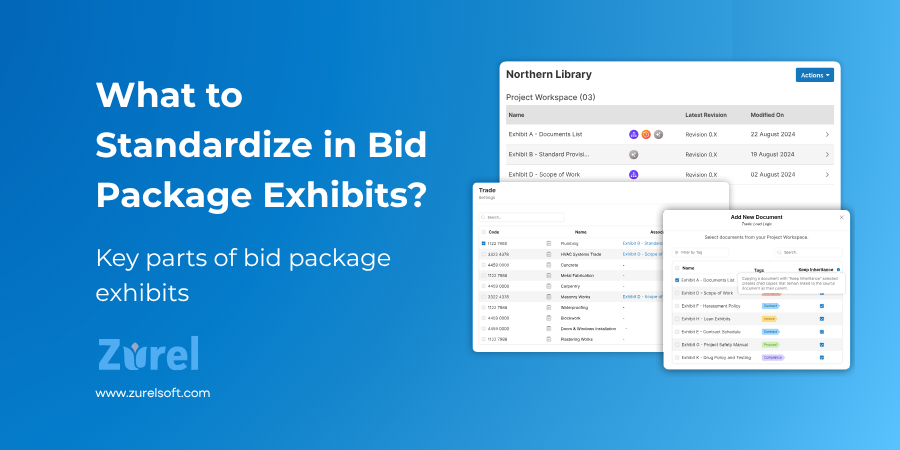
Here are the key parts of bid package exhibits that preconstruction teams should standardize.
Standardize the structure of the exhibit
Start with the overall structure. Every bid package exhibit should follow a consistent format so internal teams and bidders know where to find information quickly.
That means standardizing the order of sections, the way scope is grouped, the naming of headings, and the placement of key instructions. If one project puts exclusions at the top, another buries them in the middle, and a third spreads them across several pages, the result is inconsistency for both internal reviewers and trade partners.
For preconstruction teams, a consistent structure makes exhibits easier to build, easier to review, and easier for bidders to respond to with confidence.
Standardize core scope language
Many parts of scope language should not be rewritten from scratch on every project. Core statements about responsibilities, coordination expectations, submittals, closeout requirements, temporary protections, or cleanup often reflect organizational standards rather than project-specific decisions.
When that language changes from project to project without a clear reason, bidders may interpret the work differently. One subcontractor may include something another excludes simply because the wording changed. That inconsistency affects pricing and makes comparisons harder during bid leveling.
In preconstruction, consistent core scope language helps teams present the same expectations across projects while reducing the time spent rewriting familiar content.
Standardize inclusions and exclusions logic
Few things create more confusion than inconsistent inclusions and exclusions. On one project, a trade may be assigned a coordination task. On another, the same task may be omitted, split, or described differently. Even if the intent is the same, inconsistent wording can change how bidders price the work.
Teams should standardize how they define inclusions, exclusions, allowances, and clarifications. They should also standardize where these items appear inside the exhibit and how they are labeled.
This is important not only for bidders, but also for internal alignment. When estimators, procurement teams, and project teams all see the same framework from project to project, it becomes easier to identify true project-specific differences instead of wasting time sorting through format changes. For preconstruction teams, that means better internal consistency and more reliable bid comparisons.
Standardize terminology across trades and projects
Different teams often use different terms for the same thing. One exhibit may say “by others,” another may say “NIC,” and another may describe the same responsibility indirectly. One team may refer to “temporary barricades,” while another says “protection measures.” These differences may seem minor, but they create interpretation risk.
Standardizing terminology helps remove ambiguity. It gives bidders a more predictable reading experience and gives internal teams a shared vocabulary. It also makes it easier to train new team members, because they do not have to relearn a different writing style on every project.
In preconstruction, consistent terminology is not just a formatting issue. It is a pricing and risk issue.
Standardize formatting and presentation rules
Formatting affects comprehension more than many teams realize. If one exhibit uses bold callouts, another uses tables, and another uses long paragraphs with no hierarchy, important information gets missed.
Teams should standardize formatting rules such as heading levels, numbering conventions, bullet styles, table formats, emphasis rules, and how revisions are shown. This makes exhibits easier to scan, easier to compare, and easier to review under deadline.
Consistent presentation also helps preconstruction teams move from one project to another without losing time adjusting to a different document style.
Standardize review and approval checkpoints
What gets standardized is not limited to the document itself. The process around the document matters too. If teams want consistency across projects, they need consistency in how exhibits are reviewed and approved.
That includes deciding who can edit what, when scope sections should be locked, who reviews trade-specific language, and what needs approval before release. Without common checkpoints, even well-designed templates drift apart as different contributors make different decisions.
For preconstruction teams, standardized review steps improve quality control and reduce the chance that inconsistent or incomplete scope reaches the bidder.
Standardize project-specific customization rules
Not everything should be fixed. Some content must change based on trade, delivery method, project type, or owner requirements. The key is to standardize what is fixed and what is meant to be tailored.
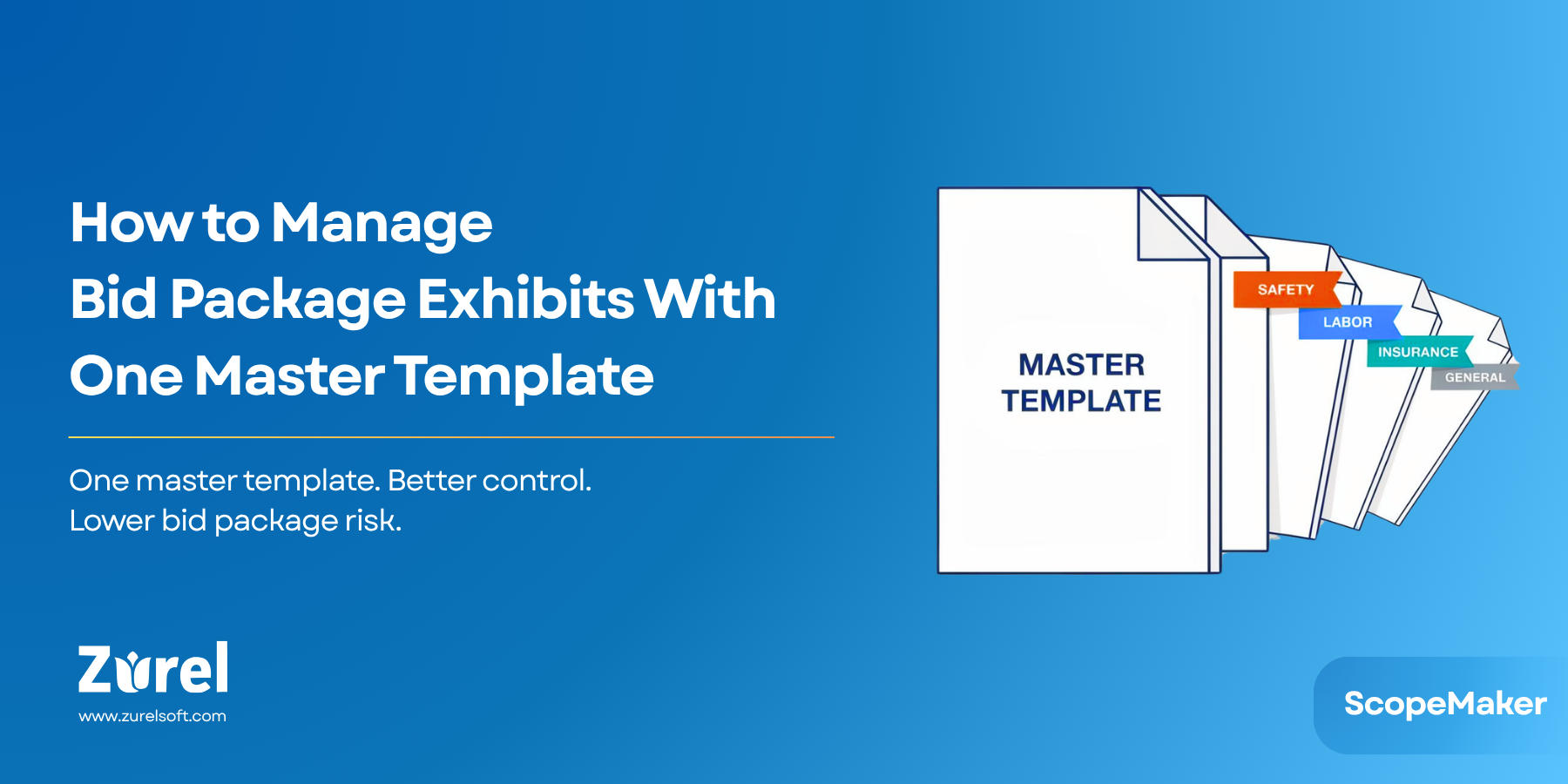
Teams should define which sections are organization-wide standards, which sections are trade-specific standards, and which sections are project-specific edits. That creates a practical balance: consistency where it matters most, flexibility where the project requires it.
This is where many preconstruction teams struggle. They either over-standardize and make exhibits rigid, or they under-standardize and end up reinventing too much. A better approach is to define clear boundaries for customization.
Standardize knowledge reuse
One of the biggest missed opportunities in preconstruction is failing to reuse what the organization already knows. Strong scope language, proven trade instructions, and lessons from past projects often stay buried in old files instead of becoming part of the organization’s standard.
Teams should standardize how approved content is saved, tagged, reused, and updated over time. That turns bid package exhibits into organizational knowledge rather than one-off project documents.
For preconstruction teams managing multiple projects, this also makes future work faster. Instead of rebuilding from scratch, teams can start with proven content and tailor only what needs to change.
Standardization should reduce risk, not create rigidity
The purpose of standardization is not to make every project read exactly the same. The purpose is to create a dependable standard across multiple projects so bidders receive clearer expectations, internal teams review documents more efficiently, and the organization reduces avoidable scope gaps.
When preconstruction teams standardize structure, language, terminology, formatting, review checkpoints, and reuse practices, they improve consistency from one bid package to the next. That leads to better pricing, faster reviews, lower training friction, and less risk carried forward into procurement and construction.
Toward the end of that effort, preconstruction teams need tools that help them apply those standards consistently across projects instead of relying on disconnected files and manual edits. That is where a system like Zurel ScopeMaker becomes relevant, because it gives teams the tools they need to standardize how bid package exhibits are created, reviewed, and reused across the organization.
If your team is working to improve consistency across preconstruction projects, explore how Zurel helps teams standardize bid package exhibits and reduce manual effort.
About Author