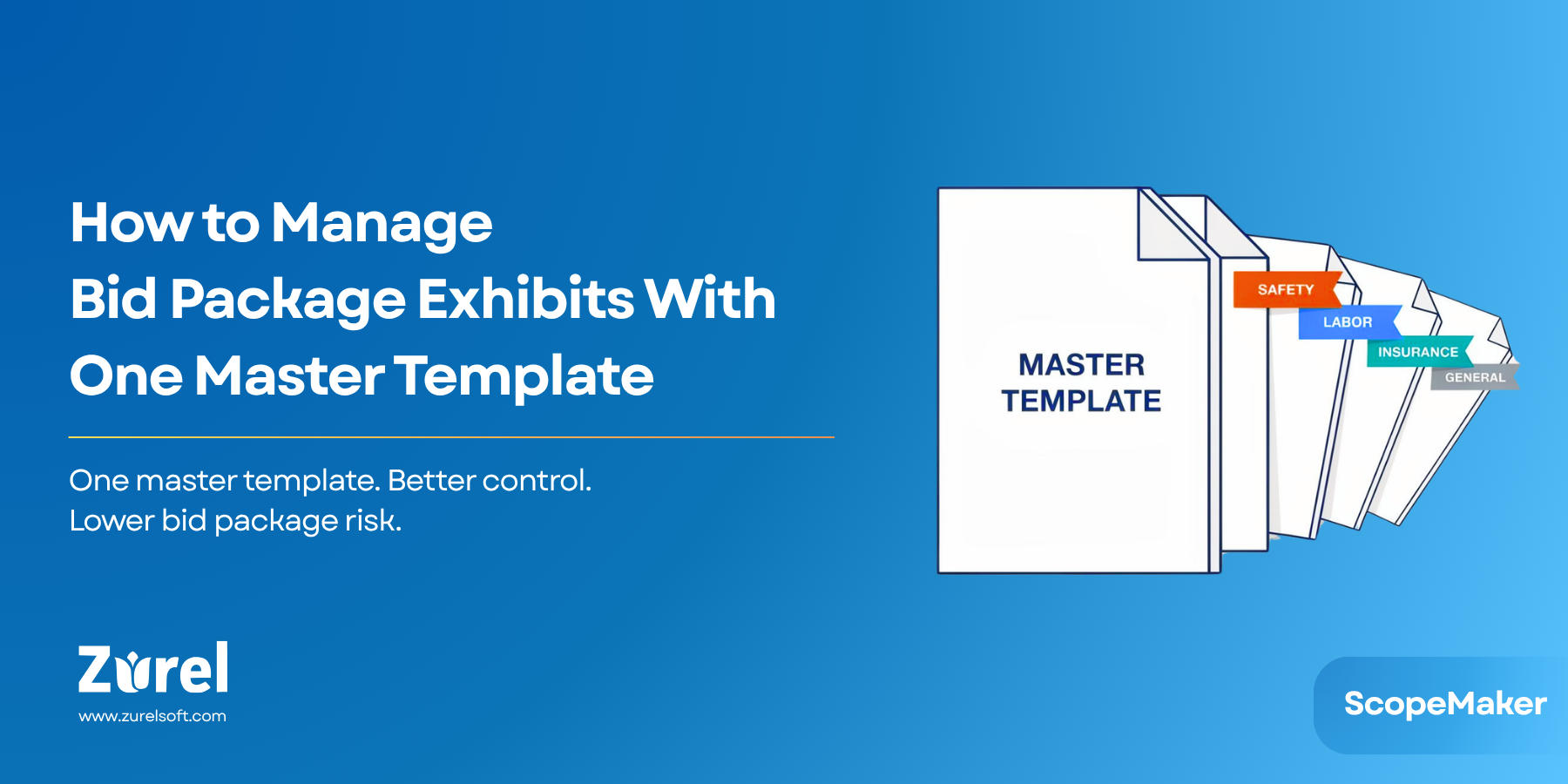

In preconstruction, standardization is not a nice-to-have. It is one of the clearest ways to increase efficiency, reduce cost, and lower risk across multiple projects in the same organization. When teams create bid package exhibits differently from project to project, inconsistency starts to affect everything around them. One project may use one structure, another may use different wording, and another may follow a different formatting approach altogether. The documents may still get issued, but the process behind them becomes slower, less reliable, and more expensive to manage.
The Risk of Inconsistency
The risk of inconsistency is bigger than many teams realize. In one package, a trade scope may be described one way. In another, the structure may change, the wording may shift, or a repeated term may not get updated the same way. One team may use one format, while another team uses a different layout, naming convention, or revision habit.
That inconsistency creates avoidable variation in the documents, but more importantly, it creates avoidable variation in how the organization communicates scope from one project to the next. Over time, that can lead to confusion, extra manual checking, scope gaps, and greater exposure to risk. When the same organization communicates requirements differently across multiple projects, it becomes harder to maintain clarity and control.
How Inconsistency Affects Bidders and Pricing
In preconstruction, bidders depend on bid package exhibits to understand what is being asked, how the package is organized, and where the boundaries of scope sit. When exhibits are inconsistent from project to project, bidders may interpret the work differently from one package to another.
Some bidders may price conservatively because they are unsure. Others may miss scope because the wording is not as clear or consistent as it should be. Others may spend more time asking questions, adding qualifications, or making assumptions just to complete their pricing. In all three cases, inconsistency works against the GC.
When bidders do not receive clear and consistent exhibits, pricing becomes less reliable. Comparisons between bids become harder. Bid leveling takes longer. Teams spend more time figuring out whether pricing differences reflect real scope differences or just confusion created by inconsistent documentation.
Why Standardization Improves Efficiency
Standardization matters because it helps teams work faster and with less friction. Without a strong standard, teams end up making the same decisions over and over again. Which document should we start from? Which wording is current? Which trade naming convention should we use? Which formatting is correct? Did we update that phrase everywhere?
Those are all small decisions, but across many packages, many projects, and many contributors, they add up to a lot of wasted time. The more your preconstruction process depends on individual memory and manual editing, the more effort your team spends recreating work that should already be defined from one project to the next.
A stronger standard reduces that repeated effort. It gives people a clearer starting point, a clearer structure, and a clearer way to build bid package exhibits consistently across multiple projects. That increases efficiency not just for one person, but across the organization.
Why Reviewing Exhibits Also Gets Easier
Standardization does not just improve the efficiency of creating exhibits. It also improves the efficiency of reviewing them.
When every contributor builds documents differently, reviewers have to spend more time checking for preventable variation. They are not just reviewing scope. They are also reviewing format, repeated wording, structure, naming, and consistency between one exhibit and another. That is expensive work because it pulls experienced team members into issues that should have been controlled earlier in the process.
A stronger standard gives reviewers a more consistent baseline. That helps them focus on the substance of the package instead of wasting time on preventable document noise. In practical terms, standardization helps teams create faster, review faster, and issue documents with less rework.
Increasing Efficiency, Reducing Cost, and Lowering Risk
This is the core business value of standardization. It is about increasing efficiency, reducing cost, and lowering risk.
It increases efficiency because teams spend less time recreating standard content, fixing formatting, and resolving preventable inconsistencies. It reduces cost because repeated edits, repeated reviews, and repeated clarifications all consume valuable labor. It lowers risk because clearer and more consistent bid package exhibits reduce the chance of confusion, misinterpretation, and scope-related problems downstream.
That is why standardization should be viewed as an operating advantage in preconstruction, not just a document preference.
Making Teams Easier to Train and Move
There is also a major team benefit. When standards are clear, it becomes easier to train new team members. Instead of teaching each person a collection of unwritten habits, you can teach them a more defined and repeatable way of working.
The same is true when moving team members from one project to another. If the organization uses a more standardized approach across multiple projects, people can transition more smoothly because the workflow feels familiar. They do not have to relearn how a different team or project structures documents or handles common exhibit tasks. That makes the organization more flexible and makes staffing changes easier to manage.
Standardization Does Not Mean Rigidity
It is important to make one point clear: standardization does not mean every exhibit has to be rigid or identical.
In preconstruction, projects still need flexibility. Different trades, delivery methods, and project conditions may require adjustments. But flexibility works best inside a standard framework. The organization should define what needs to stay consistent, then allow teams to tailor what truly needs to vary.
That is what makes standardization practical. It protects clarity and control without taking away the flexibility teams need to do the job well.
Closing Thoughts
The key point is simple: in preconstruction, standardization improves outcomes because it improves the process behind the documents across multiple projects. It helps teams create and review bid package exhibits more efficiently from one project to the next. It reduces cost by cutting repeated decisions, repeated edits, and manual cleanup. It lowers risk by reducing inconsistent communication and making scope easier to understand across the organization.
Zurel ScopeMaker gives teams the tools they need to standardize across the organization while still allowing flexibility where projects require it.
About Author